Key takeaways
- Size 4 is a housing-size discussion; a four-contact insert is a different identification problem.
- The 70 A announcement does not establish the rating of an arbitrary assembly.
- Resolve the housing, insert and matching-part references before releasing a purchase order.
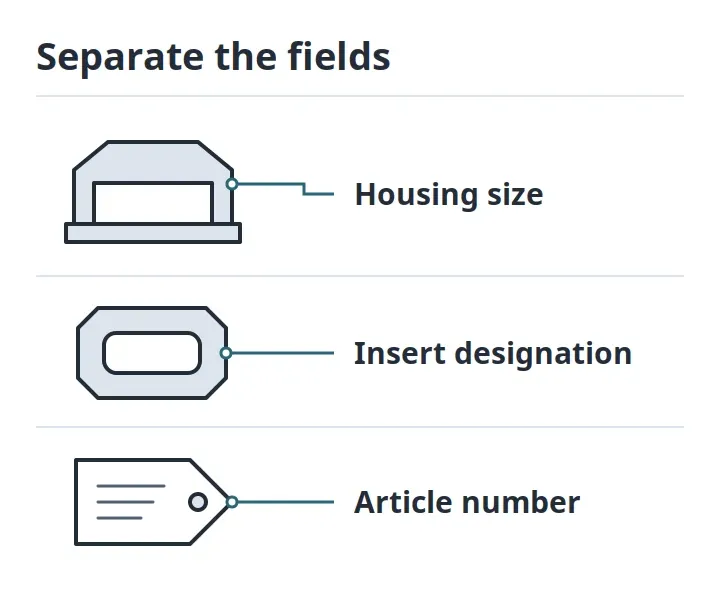
A connector order based on the words “Han 4” alone risks specifying the wrong housing or insert. Separate Size 4, the catalog’s Han 4 A four-contact insert, and Han Q 4/2 before comparing their electrical requirements.
The useful answer to a HARTING Han 4 connector search is an identification record, not a shared rating. This guide distinguishes the September 2026 Size 4 announcement from similarly written catalog names and shows what an engineer or buyer should resolve before ordering. The comparison uses public manufacturer material; it is not a test or a replacement approval. In this site’s component guides, this is a naming and documentation task, rather than an RF connector performance comparison.
What did HARTING announce, and why does the name matter?
HARTING’s release dated September 17, 2026 announces an intermediate Size 4 for its Han HPR, Han B and Han-Eco ranges and describes current-carrying capability up to 70 A. That is the context of the new “Han 4” discussion. It does not assign that current rating to every older product containing a four in its name.
| Record | Date | What it establishes | Source character |
|---|---|---|---|
| HARTING Size 4 release | September 17, 2026 | What the manufacturer announced | Manufacturer statement |
| Instrumentation Monthly coverage | October 2, 2026 | Subsequent publication of the announcement | Same underlying release, not independent testing |
| Catalog checks for this guide | October 8, 2026 | Individual product fields described below | Manufacturer catalog, accessed on that date |
The announcement’s footprint and weight comparisons concern an HPR configuration. They are not a shortcut to identifying a Han A insert or a Han Q arrangement, so this guide does not use them to rank the three names. If the engineering problem is space reduction, identify the proposed HPR assembly first; if the problem is replacing a part in an existing machine, identify the installed assembly first.
That order resembles the evidence sequence in our sourcing and quality guide: a plausible description is the beginning of verification. It is not the finished identity.
Takeaway: Put the announcement in the Size 4 housing context before attaching an electrical claim to a purchase description.
Which catalog fields separate the similar names?
Read each name against the catalog’s category, size, contact arrangement and article number. Those fields answer different questions. The following examples are identification anchors, not interchangeable options or an exhaustive list of variants. The Han A example is especially useful because its contact count and its housing-size field do not match numerically.
| Wording encountered | Verified catalog anchor | What the record actually describes | Ordering implication |
|---|---|---|---|
| Han 4 / Size 4 / 4 B | Article 19400040410, Han 4HPR-HTE-SCL-M20 | A Han HPR hood; catalog size 4 B | A hood reference alone does not identify its insert or a complete connector |
| Han 4A / Han 4 A / Han A four-contact insert | Article 09200042711, Han A 04 Pos F Insert Screw | A female screw-termination insert with four contacts, a PE contact, catalog size 3 A, and rated current 10 A | Confirm the exact insert; do not read its four-contact designation as the new Size 4 housing |
| Han Q 4/2 | Article 6112203000700, Han-Power T multi Han Q4/2 | An energy distributor whose parts list includes Han Q 4/2 inserts; the record distinguishes four power and two signal contacts, plus PE | The slash belongs to a contact-arrangement discussion, not a Size 4 housing claim |
These fields were checked in HARTING’s public entries on October 8, 2026. Its industrial-connectors catalog explicitly labels the four-contact group Han® 4 A, with size 3 A and the selected female article 09 20 004 2711 on printed page Han 01 · 7. The spacing in that catalog label makes the naming distinction directly traceable. The last row identifies the meaning of the arrangement through a listed distributor assembly; it does not transfer that assembly’s ratings to every Q 4/2 variant. Obtain the individual insert reference when specifying an insert.
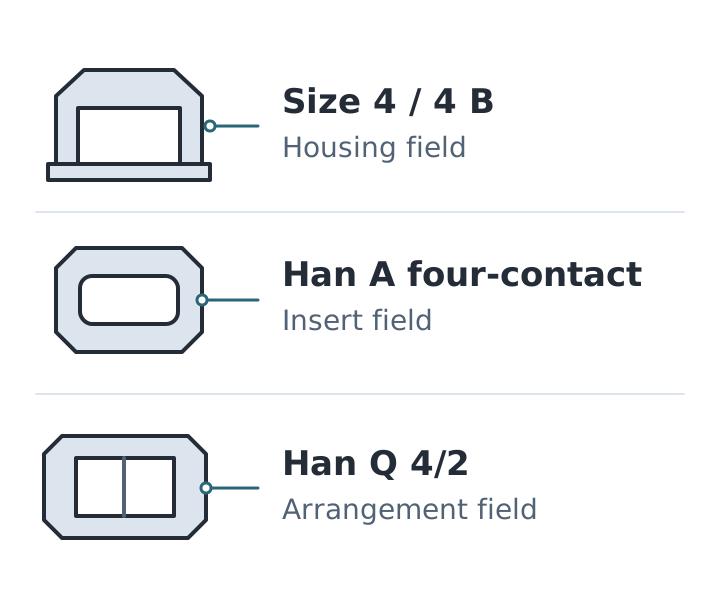
Common mistake: Copying the number four from a search result into a drawing’s housing-size field. The Han A entry above has four contacts but specifies size 3 A.
Use the engineering comparison checklist to record conditions beside each requirement once the item is identified. A shared word or number cannot establish a matching interface.
Takeaway: Resolve what each name describes before treating it as an orderable assembly.
Who needs to change a drawing or purchase description?
Buyers with ambiguous bills of materials and engineers evaluating a smaller enclosure need different outputs. The announcement makes an evaluation relevant; it does not mean an existing drawing has become incorrect. Start with the document that is ambiguous and assign its unresolved fields to the person who can identify the actual parts.
| Reader and trigger | Useful output | Evidence to collect |
|---|---|---|
| Buyer receives a request saying only “Han 4” | A clarified purchase description | Manufacturer article number and item category |
| Electrical designer considers Size 4 instead of Size 6 | A proposed complete assembly and review questions | Hood, housing, frame, insert and matching-parts records |
| Maintenance team replaces a damaged connector | A record of the installed mating pair | Labels, photographs, drawing revision and original part list |
For a replacement, document the old item before choosing the new one. The obsolete-component sourcing article explains why matching a label and documenting provenance are separate checks. Here, the additional task is to identify which portion of the assembly that label belongs to.
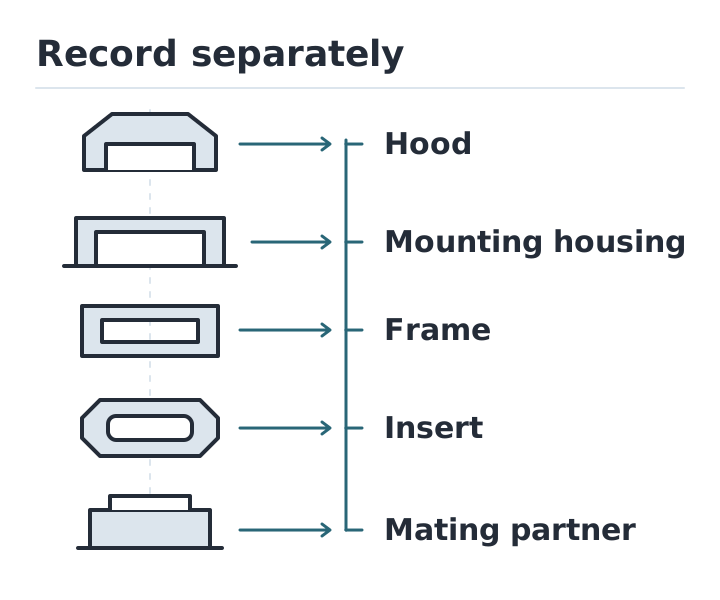
An engineering requirements review should then record the application conditions. A procurement description can identify the part correctly while still omitting the conditions needed to assess it.
Takeaway: Repair an ambiguous record first; assess the proposed assembly against the application second.
When should a US buyer act, and what remains open?
The announcement supports starting a technical inquiry now. It does not provide a verified US delivery date for the assembly a particular buyer needs. Use the dated source checks above as a record of what was reviewed, and obtain current written answers before making an introduction or replacement commitment.
| Decision point | Timing supported by this review | Who can resolve the remaining item |
|---|---|---|
| Clarify an ambiguous part request | At drawing or BOM review | Design owner, using the exact catalog record |
| Evaluate the announced Size 4 option | Technical evaluation can begin after the September 17 announcement | Manufacturer application contact, using a complete proposed assembly |
| Commit a US purchasing date | Date to be confirmed | US manufacturer channel or distributor, using the exact article list |
For the announced up-to-70-A capability, request the applicable insert or module, conductor conditions and derating documentation. Ask for the approval record that applies to the selected assembly and the intended market. Do not infer an assembly approval from a housing property or from the press release’s certification wording.
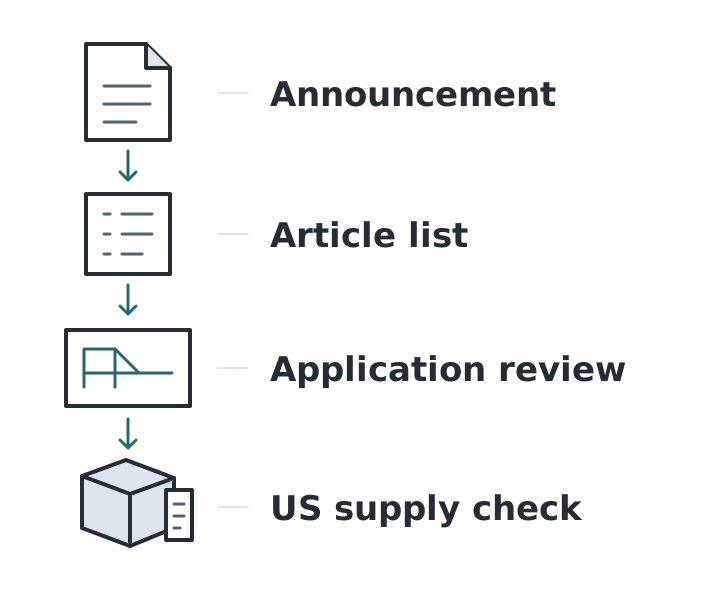
Our sources methodology distinguishes a manufacturer’s statement from independent evidence. Our fact-checking policy describes how to report a discrepancy; neither page supplies a missing product approval.
Takeaway: Turn each unresolved claim into a named document request before committing the purchasing date.
When this does not apply
This guide does not select an RF coaxial connector, certify a railway installation or authorize a Size 6 replacement. It resolves a naming ambiguity using specific records. Products with another suffix, termination or assembly reference require their own catalog check, and the exact manufacturer’s matching-parts information governs the next technical review.
The checked Han A article also carries a manufacturer notice advising against new design-ins and points to a successor. That notice concerns the specific article reviewed here. A buyer using it for identification should follow the catalog’s successor reference rather than interpret this guide as a recommendation to design it into new equipment.
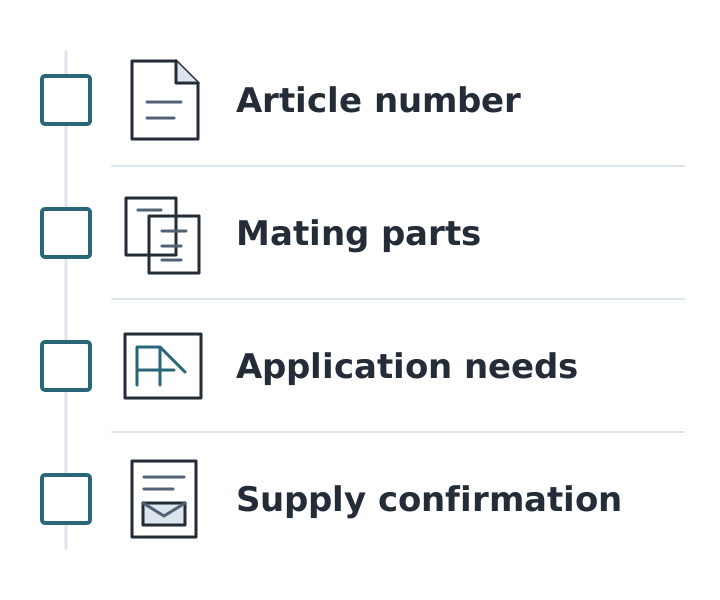
The site’s publication scope explains its role in organizing specifications and sourcing questions. The identification table here remains a record-reading aid for the named connector examples.
Takeaway: Use the table to resolve identity, then return to the application documents for suitability.
Method and sources
This is an editorial comparison compiled from public manufacturer records checked on October 8, 2026. The source list identifies the release and the individual catalog entries. The Han Q naming example comes from a listed distributor assembly and is used only to explain its contact-arrangement fields. No electrical tests, dimensional interchangeability checks or independent verification of the announced benefits were performed.
The editorial policy describes the site’s independent publication role. The diagram labels summarize the identification steps in this article; they do not reproduce a manufacturer’s engineering drawing.
Further reading
- Component guides — For a separate RF component task, find the relevant functional specification guide.
- Obsolete-component sourcing — Separate part markings from supply-chain evidence in a replacement purchase.
- Engineering guides — Compare specifications with their units and operating conditions attached.
Frequently asked questions
What are Harting connectors?
HARTING's announcement concerns its Han industrial connector ranges. For this naming task, distinguish a housing, an insert and a contact arrangement within that portfolio. The shared manufacturer name does not make differently designated parts interchangeable or assign them a common current rating.
Where are Harting connectors made?
Check the country-of-origin field for the exact article. The reviewed Han A insert lists Romania, while the reviewed HPR hood lists China. Those catalog fields concern those individual articles; they do not establish one manufacturing location for every HARTING connector or complete assembly.
Where can I buy Harting?
Start with the exact article’s manufacturer catalog entry, which includes a Distributors option. The source list links the checked entries. For a US purchase, confirm the applicable channel and written availability of the complete article list; the catalog record itself does not establish local stock.
Sources
- Connector size Han 4: Higher energy density for transport technology — HARTING Accessed October 8, 2026.
- Han 4HPR-HTE-SCL-M20, article 19400040410 — HARTING Accessed October 8, 2026.
- Han A 04 Pos F Insert Screw, article 09200042711 — HARTING Accessed October 8, 2026.
- Han-Power T multi Han Q4/2, article 6112203000700 — HARTING Accessed October 8, 2026.
- Industrial Connectors Han catalog, printed page Han 01 · 7 — HARTING Accessed October 8, 2026.
- Connector size Han 4 coverage, October 2, 2026 — Instrumentation Monthly Accessed October 8, 2026.