Direct answer
Missing traceability can leave an obsolete RF part’s identity unresolved even when it produces a signal. Check the original manufacturer, authorized aftermarket manufacturer and authorized suppliers first, then assess other sources against documented custody and a risk-based test plan. DFARS defines an obsolete electronic part as unavailable from the original or authorized aftermarket manufacturer; sourcing, notification and counterfeit disposition obligations below apply where the relevant contract clauses govern. Ordinary nonconformance needs its own disposition decision, not an automatic counterfeit report.
Key takeaways
- Under the cited DFARS definition, obsolete means unavailable from the original or authorized aftermarket manufacturer; it does not establish authenticity or functionality.
- Under applicable DFARS sourcing clauses, contractor-approved and other sources carry specified buyer authentication responsibilities; check the contract scope.
- Traceability is a chain back to the original manufacturer, not a certificate of conformance from the seller.
- When GAO bought military-grade parts from internet platforms using rare part numbers, every part it received was suspect counterfeit.
- For RF parts, DC and continuity checks prove almost nothing. The parameters that identify the part are RF parameters.
- Set the inspection and evidence requirements before evaluating offers; assess whether the seller can support that plan.
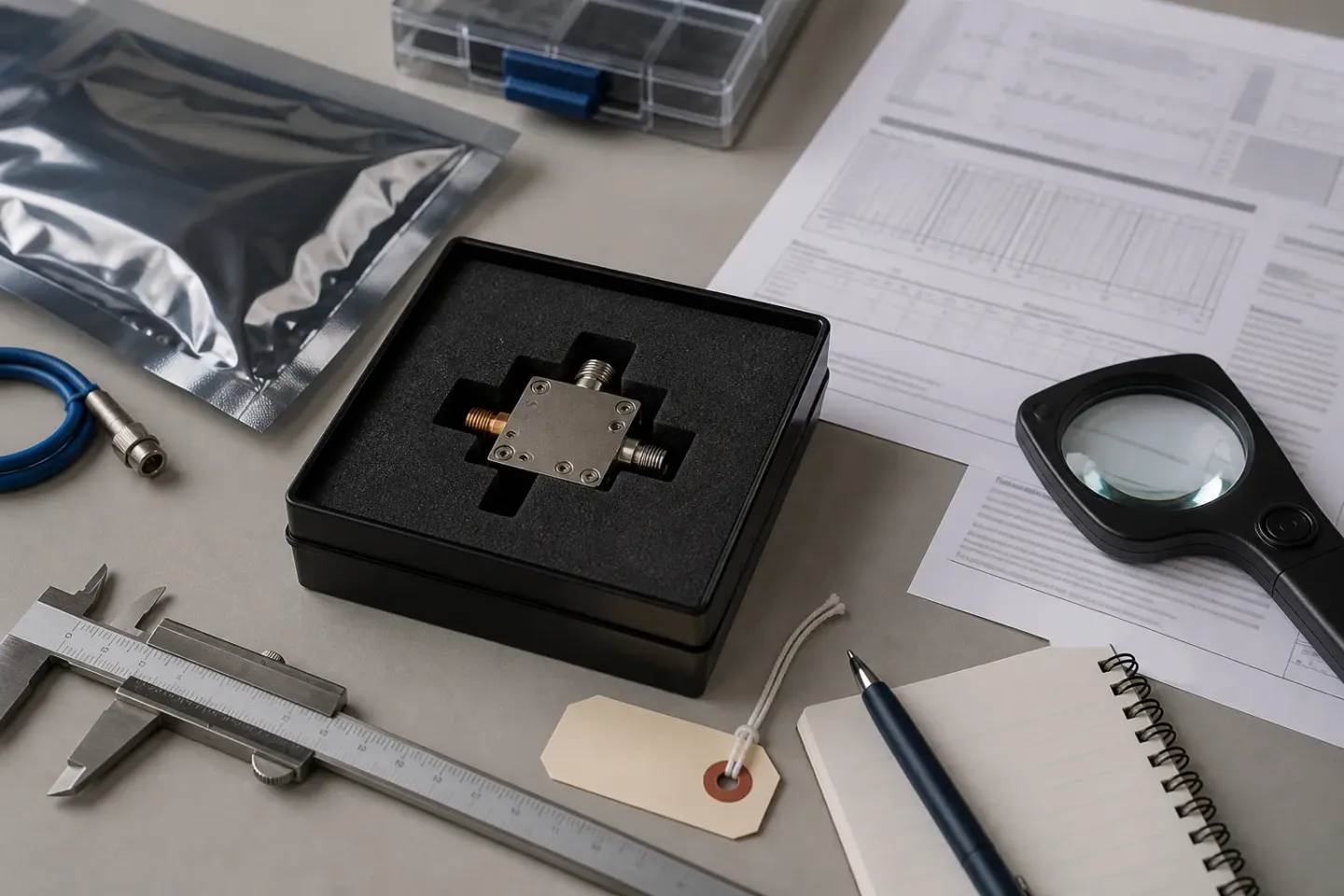
This sourcing and quality guide addresses evidence when a specified RF part is unavailable. Check lifecycle notices and authorized availability rather than inferring obsolescence from the age of the equipment. Use the supplier checklist before committing to stock.
| Channel / status | Required evidence to assess | Next action |
|---|---|---|
| Original / authorized aftermarket manufacturer | Exact part, drawing and current availability | Confirm lifecycle and revision |
| Authorized supplier | Written authority and custody records for the lot | Verify records and agreed acceptance checks |
| Contractor-approved source | Documented approval, source records and authentication plan | Apply the governing contract’s conditions |
| Other source or uncertain used status | Evidence gaps, inspection plan and notification requirements | Resolve applicable obligations before acceptance |
This is an editorial review aid. DFARS obligations depend on the applicable contract, part status and sourcing route.
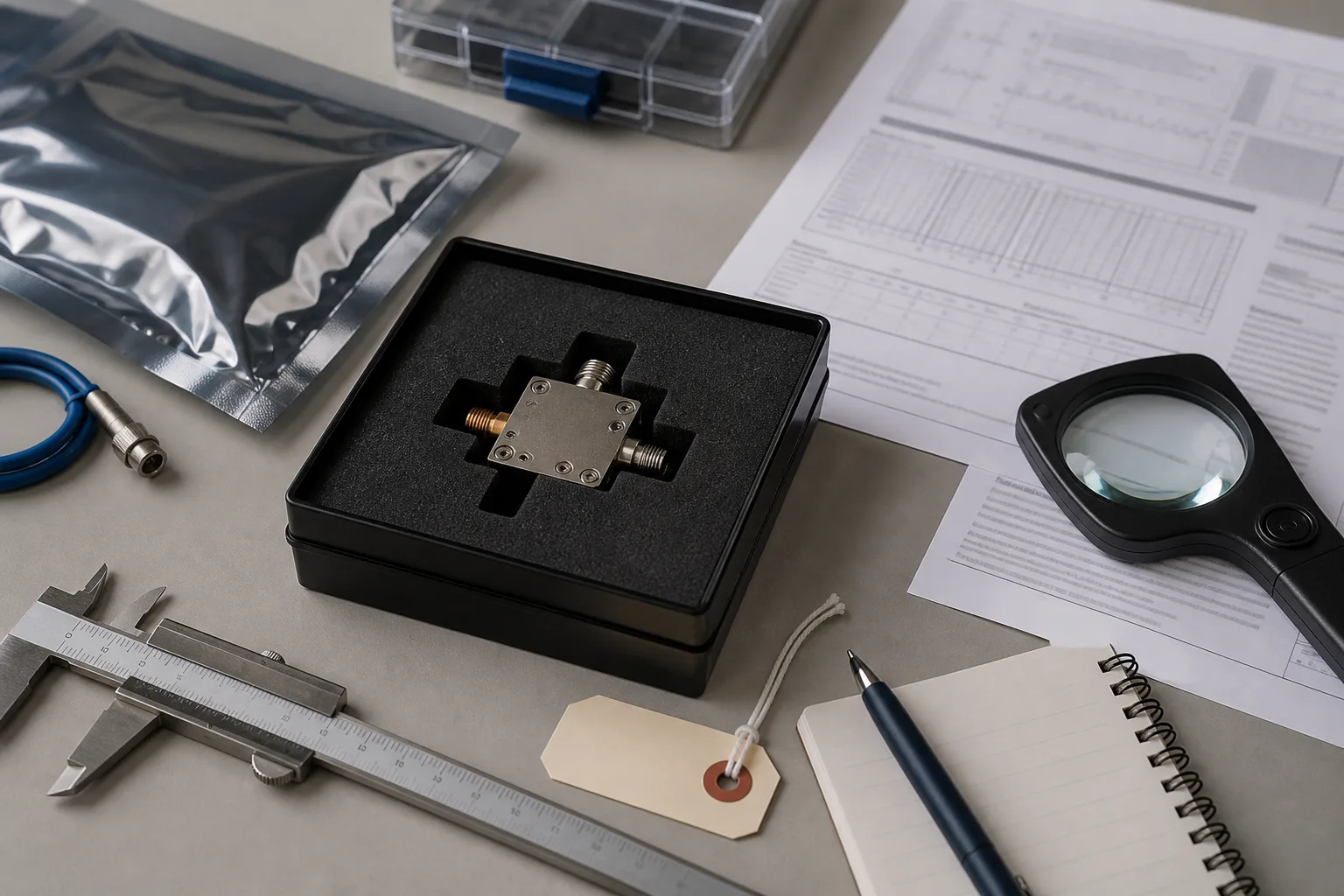
What “obsolete” means, precisely
Defense procurement gives the word a narrow definition worth borrowing: an obsolete electronic part is one that is no longer available from the original manufacturer or an authorized aftermarket manufacturer.
Notice what the definition does not say. It says nothing about the part being unfit, and nothing about whether honest stock exists. Authorized distributors hold inventory after a last-time buy, aftermarket manufacturers licence and continue some lines, and equipment teardowns produce genuine parts with imperfect paperwork. Obsolescence removes one route, the one that came with the manufacturer’s own chain of custody. Everything that follows is about replacing that chain with evidence of your own.
Why an RF part’s lifecycle needs checking
Check the actual lifecycle evidence, rather than assuming a production volume or retirement cause. A discontinuance notice, last-time-buy notice or authorized availability confirmation establishes the sourcing problem for the exact part.
Replacement then depends on the functions your design uses. A YIG oscillator needs its driver interface, tuning behavior and phase-noise conditions compared; a similar housing is not enough. Use radar RF component selection when the replacement also changes the waveform timeline.
Three channels, and where responsibility sits
The useful distinction is not “distributor or broker” but who is accountable for authenticity.
An authorized supplier is defined as a supplier, distributor or aftermarket manufacturer with a contractual arrangement with, or the express written authority of, the original manufacturer to buy, stock, repackage, sell or distribute the part. Verify that the received lot has the claimed authorized custody records.
A contractor-approved supplier is one without that arrangement, but which the buyer has identified as trustworthy on the basis of its own assessment. Where DFARS 252.246-7008 applies, paragraph (b)(2) puts conditions on that: approval must rest on established counterfeit prevention industry standards and processes, including inspection, testing and authentication, and the buyer assumes responsibility for the authenticity of parts provided by such suppliers.
For contracts containing DFARS 252.246-7008, paragraph (b)(3) addresses other sources and uncertain used status: a contractor who sources outside the specified categories under that paragraph, or who cannot confirm that an electronic part is new or previously unused, must follow the clause’s written Contracting Officer notification and inspection, testing and authentication requirements.
Read as engineering rather than as contract law, that hierarchy is a statement about evidence. Evidence gaps determine what additional verification is needed; a test does not recreate a missing custody chain.
Takeaway: Confirm source status and applicable contract conditions using the supplier checklist.
What the open market actually returns
The clearest public measurement of that risk is a government audit. GAO set up a fictitious company, joined two internet platforms selling military-grade parts, and requested 16 parts: authentic numbers for rare or obsolete devices, authentic numbers with postproduction date codes, and part numbers that do not exist. None of the 16 parts vendors provided were legitimate. All twelve of the parts supplied against rare-part or postproduction-date-code requests were suspect counterfeit; testing showed parts re-marked to display the part numbers and manufacturer logos of authentic parts, and date markings altered to represent parts as newer than their last production. The four remaining requests used invented part numbers, and vendors supplied those too.
Two caveats matter for reading it honestly. GAO selected on lowest price, and its sample is explicitly nongeneralizable — it cannot be used to make inferences about the extent to which parts are being counterfeited. What it does establish is that asking for a rare part number by itself attracts fabricated supply, which is precisely the situation an obsolete RF part puts you in.
The documents to require
Traceability, in the regulatory sense, is a process that tracks parts from the original manufacturer to product acceptance — a chain, not a certificate. Ask for the chain, and note where it stops:
- Named chain of custody, with each intermediate holder identified, not merely “sourced from a European stockist”.
- Original manufacturer documentation: the datasheet revision the part was built to, and any test data supplied with the original shipment.
- Certificate of conformance, understood for what it is: an assertion by whoever signed it.
- Original packaging evidence — manufacturer labels, ESD packaging, moisture-barrier bags and desiccant condition, reels or trays as shipped.
- Storage and handling history, especially for hermetic or moisture-sensitive assemblies.
- The seller’s own counterfeit-avoidance process, and what it does when a lot fails.
For contracts governed by DFARS 252.246-7008(c), missing traceability triggers the specified inspection, testing, authentication and record-retention requirements. For other purchases, set the evidence plan from the applicable contract and consequence of failure.
Takeaway: Record where custody evidence stops and resolve it in the supplier checklist before accepting the lot.
Inspection: markings, packaging, construction
Visual and mechanical inspection can reveal evidence of re-marking; it does not alone establish authenticity. The GAO result shows what to look for: markings are the attacker’s easiest surface, so treat them as claims. Compare font, spacing and logo detail against a known-good part of the same family; look for surface texture that suggests sanding or re-coating; check that the date and lot codes are consistent between part, tray and paperwork, and that the date code is plausible for the package and process. Solvent resistance of the marking, X-ray of the internal structure, and decapsulation of a sample are the escalation path when the visual result is ambiguous.
For microwave assemblies rather than plastic-packaged semiconductors, add the mechanical checks that matter to that class: connector condition and torque marks, evidence of rework at the housing seams, hermetic seal integrity, and whether serial numbers on the housing match the paperwork and the internal boards.
Electrical test: the part is its RF parameters
This is where RF sourcing differs most from general electronics. A continuity check or a DC current draw tells you almost nothing about a microwave part, because the parameters that define it are RF parameters, measured under specified conditions.
- Sources. Tuning range and linearity across the full span, output power flatness, harmonic and spurious content, and phase noise at the offsets your system uses. A YIG oscillator that oscillates has passed nothing yet.
- Filters. Insertion loss and return loss across the passband, rejection at the offsets you rely on, and for tunable parts the centre-frequency accuracy against coil current. The behaviour and its limits are set out in YIG-tuned filters.
- Converters. Conversion gain, image rejection, LO leakage and spurious products swept across the real frequency plan, as described in frequency converters.
- Synthesizers. Lock behaviour, step size, settling time and spurious close to the carrier — see microwave frequency synthesizers.
Test at temperature where the design depends on it. An ambient-only result does not establish performance at the specified operating extremes.
| Stage | What it catches | Evidence it produces |
|---|---|---|
| Documentation review | Chains that stop short of the manufacturer | Named custody chain, or the point where it ends |
| External visual and marking | Re-marking, sanding, mixed lots | Photographs against a known-good reference |
| Packaging and date code | Repackaged or misrepresented stock | Consistency between part, packaging and paperwork |
| Mechanical and construction | Rework, reclaimed parts, damaged seals | Connector, seam and seal condition; serial cross-check |
| RF parametric test | Wrong, degraded or substituted devices | Measured parameters against the datasheet revision |
| Test at temperature | Parts that pass only at ambient | Performance across the operating range |
| Disposition | Suspect lots re-entering the supply chain | Quarantine record and, where applicable, a report |
Depth should follow consequence. A part in a laboratory jig and the same part in a flight system do not warrant the same plan.
Takeaway: Match RF test results to the exact revision and required conditions; use the surplus YIG checks for that assembly type.
What to ask a supplier for
The list below is what to request from a supplier before committing. It is a preparation checklist, not a quotation request — this site does not sell, broker or quote parts, and there is nothing to submit here.
- Exact manufacturer part number and datasheet revision, with the marking as it appears on the parts in stock.
- Quantity available, date and lot codes present in that stock, and whether the lot is homogeneous.
- Chain of custody back to the original manufacturer, with intermediate holders named.
- Storage conditions and packaging state, including whether parts have been removed from original packaging.
- Whether any testing has already been performed, by whom, to what standard, and whether the reports travel with the parts.
- Whether the parts are new, previously unused, or of unknown status — asked explicitly, because the answer determines your obligations.
- The seller’s counterfeit-avoidance process and its disposition procedure for suspect lots.
- Terms that allow rejection and quarantine after your own inspection, rather than return-for-credit only.
Risk, and where it lands
Decide the inspection plan before comparing offers. Separate performance nonconformance from counterfeit suspicion: hold the latter pending authenticity review and, where DFARS 252.246-7007 applies, follow paragraph (c)(6) reporting and quarantine requirements. For ordinary nonconformance, use the applicable quality and contract disposition procedure. Do not infer counterfeit status solely from an RF test failure.
Takeaway: Make the lot’s disposition decision from documented findings and applicable obligations; retain the supplier-checklist records.
Receiving used or surplus YIG devices
A familiar housing or a seller’s claim that a part oscillates does not establish identity, traceability or full-band performance. Keep the authorized-versus-open-market sourcing distinction on this page: an incoming electrical check cannot recreate a missing chain of custody.
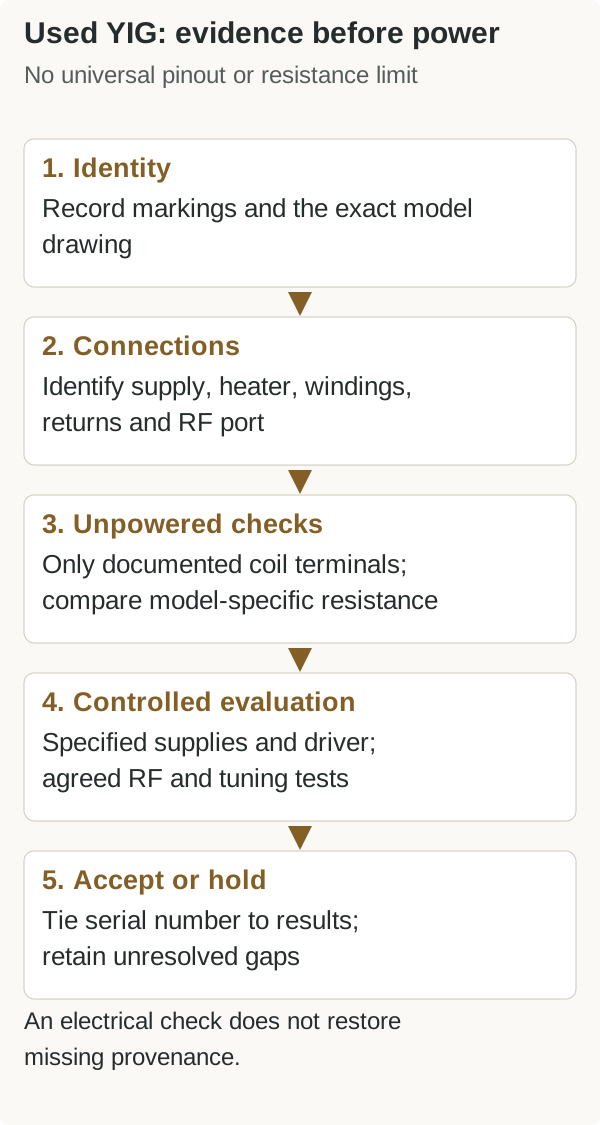
| Gate | Evidence to retain | What it does not prove |
|---|---|---|
| Identify the exact assembly | Markings, model suffix, serial/date information, seller documents and matching outline drawing | That a similar-looking replacement has the same pinout |
| Resolve the connections | Manufacturer documentation for supply, heater, main/FM winding, returns and RF port | That a generic internet pin diagram applies |
| Check documented windings, unpowered | Resistance measured only between positively identified winding terminals, with the unit disconnected; compare with that model’s specified value and conditions | RF performance, authenticity or calibration |
| Plan a controlled powered evaluation | Approved driver/supplies, warm-up, frequency/current sweep, output level and required spectral/tuning checks | Compliance with conditions that were not measured |
| Decide acceptance | A record linking the received serial number to the test results and agreed limits | That a failed or undocumented unit can be accepted merely because it produces one tone |
Micro Lambda defines coil resistance as an ohmmeter measurement in its YTO technology description. Its FM driver note illustrates why the driver and winding form a specific electrical interface. These are the basis for documenting a winding check, not for assigning an unknown pinout by resistance alone. There is no universal main-coil or FM-coil resistance pass value.
If a drawing or electrical limit is missing, hold the part pending manufacturer or qualified engineering identification. Do not apply power to guessed pins or substitute a high-voltage insulation test for the documented checks. Set acceptance criteria with the YIG oscillator specification guide; this section does not recommend sellers, prices or unverified replacement parts.
For assembled boards, the PCB cleaning process primer prompted by KYZEN’s Penang announcement distinguishes supply news from the material, process and verification evidence needed for a cleaning change.
Frequently asked questions
Is buying from an independent distributor a bad idea?
No, it is a different risk position. The authorized channel carries the manufacturer's chain of custody; outside it, you carry the burden of demonstrating authenticity yourself. Independent distributors that work to counterfeit-avoidance standards and can document their own sourcing are a normal route to obsolete parts. The mistake is treating the two channels as interchangeable because the part number matches.
What is the single most useful document to ask for?
The chain of custody back to the original manufacturer, naming each intermediate holder. A certificate of conformance signed by the seller only attests to what the seller believes. If the chain stops at a broker, you know the point at which your evidence stops as well.
Does a matching date code mean the part is genuine?
No. Markings are the easiest thing to change. In the GAO purchases, parts were re-marked with authentic part numbers and manufacturer logos, and date markings were altered to make parts look newer than their last production. Treat a date code as a claim to verify, not as evidence.
Is a functional test enough for an RF part?
Only if the test exercises the parameters that define the part. A YIG oscillator that produces an output is not therefore in specification for tuning linearity, phase noise or power flatness, and a converter that passes a signal is not therefore free of spurious products. Test the parameters your design depends on.
What should happen to a part that fails inspection?
Separate ordinary nonconformance from evidence of counterfeit or suspect counterfeit status. Hold suspect lots pending review; where DFARS 252.246-7007 applies, follow its quarantine and reporting requirements. A genuine part that fails a performance limit follows the applicable quality and contract disposition process; failure alone does not establish counterfeiting.
Sources
- DFARS 252.246-7007, Contractor Counterfeit Electronic Part Detection and Avoidance System — U.S. Department of Defense, via Acquisition.gov Accessed October 8, 2026.
- DFARS 252.246-7008, Sources of Electronic Parts — U.S. Department of Defense, via Acquisition.gov Accessed October 8, 2026.
- GAO-12-375, DOD Supply Chain: Suspect Counterfeit Electronic Parts Can Be Found on Internet Purchasing Platforms — U.S. Government Accountability Office Accessed October 8, 2026.
- ERAI supply chain risk mitigation and reported parts database — ERAI Accessed August 28, 2026.
- Technology Description: YIG Tuned Oscillators, coil-resistance definition — Micro Lambda Wireless Accessed October 8, 2026.
- Application Note: YIG Drivers / FM Coil Drivers, figures 1 and FM-1 — Micro Lambda Wireless Accessed October 8, 2026.