Key takeaways
- Identify the reporting period and accounting basis before using an earnings headline.
- Use financial reporting to prepare supplier questions, not to assert an order's delivery outcome.
- Keep a company outlook separate from a confirmed project commitment.
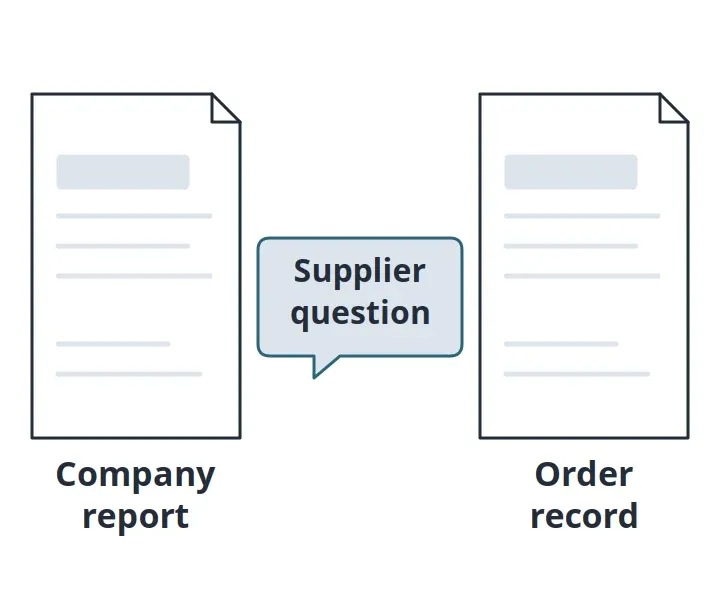
Treating a strong earnings headline as proof of your order’s delivery can leave a sourcing review unfinished. Read the company report for context, then ask for evidence tied to the site, assembly and purchase commitment that matter to your project.
The useful procurement reading of Jabil fourth quarter fiscal 2026 results is a set of questions, not a supplier score. EMSNow’s October 1, 2026 article provides a case for recognizing period labels, GAAP and non-GAAP headings, management commentary and outlook sections. This guide shows a US electronics buyer what to look for in the original records, without repeating financial numbers or estimating delivery risk from them. It complements the component guides by focusing on documentation for outsourced assemblies rather than their RF specifications.
What is the case material, and what can it establish?
EMSNow published its Jabil fourth-quarter and full-year results article on October 1, 2026. Its opening describes the reported results as preliminary and unaudited, for the quarter and fiscal year ending August 31, 2026. These are labels in the media text, not an independently verified filing status. Here it serves as a reading exercise: its organization shows the categories a buyer should locate and distinguish. A media report is not a substitute for the underlying financial records or an order-specific operating review.
| Record or activity | Date | Role in this guide |
|---|---|---|
| Period endpoint stated in the media report | August 31, 2026 | Reporting-period boundary, distinct from the news date |
| EMSNow article | October 1, 2026 | Published case material, described as preliminary and unaudited |
| Editorial source check | October 8, 2026 | Identify the report’s structure and evidence boundaries |
| Company-document reconciliation | Before using a financial value | Verify the applicable original release, filing and accounting basis |
| Order-level review | Before an allocation or delivery commitment | Obtain evidence for the relevant site and program |
The report labels separate quarterly and full-year highlights and subsequent outlook sections. It also distinguishes GAAP and non-GAAP measures. Those labels are the case study’s useful material; this guide does not adopt its numbers as a financial assessment of Jabil.
The source discipline is explained in our sources methodology. If the original company record is unavailable during a review, leave its value out of the decision record rather than fill it from an unrelated period.
Takeaway: Identify what kind of document you have before asking what decision it can support.
Which fields should an EMS buyer look for first?
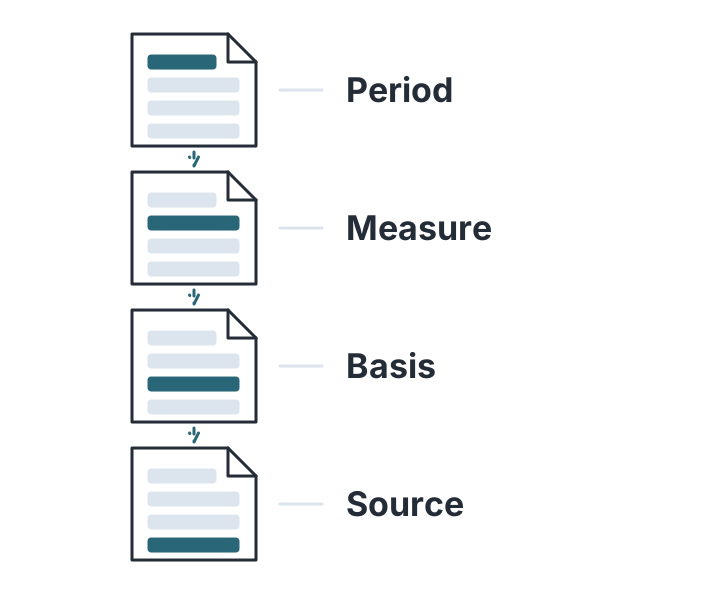
Start by locating the reporting period, measure name and accounting basis, then find the corresponding company document. Keep historical results apart from expectations. The SEC’s financial-statement guide distinguishes period reporting from balance-sheet snapshots; its non-GAAP interpretations explain why an adjusted presentation needs its corresponding GAAP comparison and reconciliation.
| Location in this report | Classification to record | Original record or project evidence still needed |
|---|---|---|
| Q4 FY2026 and full-year FY2026 sections | Two historical reporting scopes; the opening labels them preliminary and unaudited | Applicable company document and period-end confirmation |
| Q1 FY2027 and full-year FY2027 sections | Outlook for later periods, kept apart from FY2026 results | Dated original outlook and its assumptions |
| GAAP operating earnings beside the core operating measure | Different accounting presentations | Company reconciliation and definitions of excluded items |
| Adjusted free-cash-flow references | Selected financial measure, not a full cash-flow statement in this news text | Original cash-flow statement and adjustment reconciliation |
| Management discussion of added capacity | Attributed management commentary | Site, process and program commitment relevant to the order |
This is a reading worksheet, not a financial test. A blank field means the buyer should obtain the document or exclude that field from the assessment. It is not an invitation to calculate a proxy from an adjacent headline.
The engineering specification checklist applies a similar habit to technical data: compare fields with their conditions attached. When procuring a frequency-converter module, the financial record belongs beside the technical requirement, not in place of it.
Common mistake: Comparing a quarterly GAAP result with a full-year adjusted result as if only the supplier’s performance had changed. Resolve period and basis first.
Takeaway: Record the label and scope before treating a reported value as comparable evidence.
Who is affected, and how does company context become a useful question?
Procurement, program management and supplier-quality teams can use the report to prepare different questions. The link between a company-level statement and an individual order is a request for evidence, not a proven causal relationship. Assign each question to the person responsible for the relevant operational record.
| Reader | What to look for in the report | Separate evidence needed for the decision |
|---|---|---|
| Sourcing manager | Disclosed business scope and management discussion | Named manufacturing site and proposed program allocation |
| Program manager | Outlook and capacity-related commentary, if present | Written milestone plan, responsible owner and current constraints |
| Supplier-quality engineer | Company context that warrants a process question | Program-specific acceptance, traceability and change records |
| Component engineer | Whether the proposed outsourcing discussion concerns the required assembly | Drawing revision, test scope and approved materials |
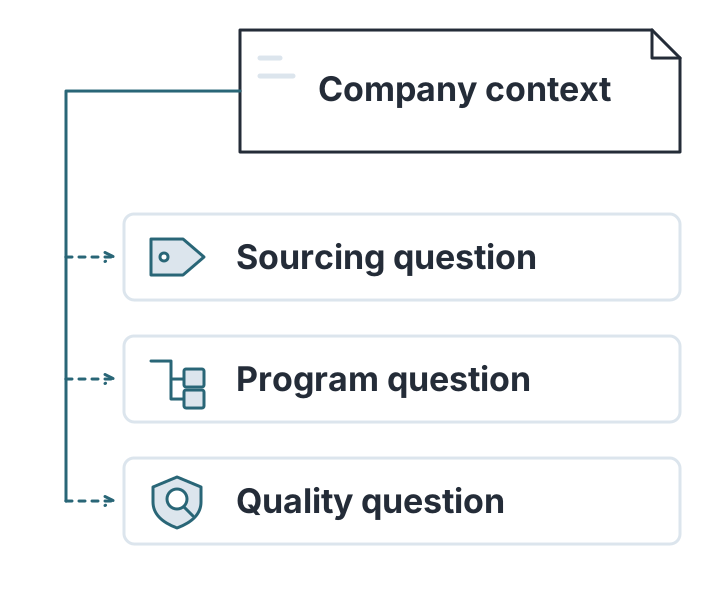
In this report, management describes bringing additional capacity into operation. Use that attributed statement to ask which site and process are relevant to the proposed assembly and what milestone has been committed to the program. The follow-up question is our editorial contribution; the reported company comment does not establish an allocation to the reader’s order.
The sourcing and quality hub separates supplier statements from acceptance evidence. The obsolete-component sourcing guide makes the related distinction between identifying a part and proving its provenance. Both are operational tasks that an earnings document cannot finish.
Takeaway: Convert company context into a question with an owner and a required record.
When should you act, and what is still unresolved?
Begin a document review when the report enters the supplier discussion; begin a purchasing action when the project evidence supports it. The October 1 publication date provides a dated trigger for this reading exercise. It does not provide an introduction date, shipping date or change-control milestone for any electronics buyer.
| Decision | Evidence that would support it | Owner or next action |
|---|---|---|
| Update company context in a sourcing review | Correctly scoped original report | Procurement analyst records document and date |
| Resolve a measure or accounting comparison | Original table and reconciliation | Finance reviewer checks consistent basis |
| Confirm a manufacturing commitment | Program allocation and agreed milestone record | Supplier program owner confirms in writing |
| Change a component or process acceptance plan | Applicable drawing and approval record | Engineering and supplier quality review the change |
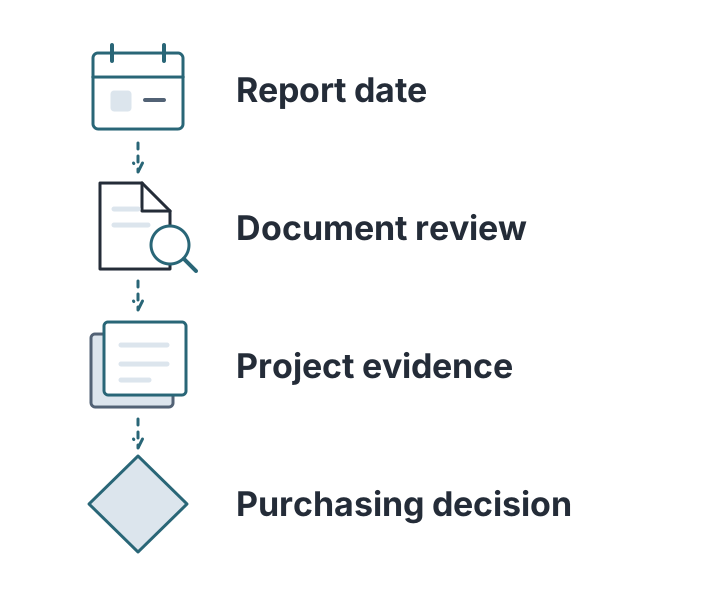
The case material reviewed here does not establish allocation for a particular US program, order-specific delivery performance or the readiness of its production process. Ask the relevant supplier owner for the record that addresses each issue. Avoid turning an unanswered project question into a company-wide conclusion.
Use our editorial policy to distinguish this independent reading guide from a supplier recommendation, and the fact-checking policy to flag a document mismatch.
Takeaway: Let the report trigger questions; let the project records determine the purchasing action.
When this does not apply
This method does not predict stock performance, establish solvency, rank EMS providers or calculate an order’s chance of delay. It also does not demonstrate an assembly’s electrical or environmental acceptance. Those decisions require their respective evidence and responsible reviewers.
An RF program still needs the functional requirements described in the signal-chain overview and the application-specific acceptance context in radar component selection. Keep those technical decisions visible when reviewing supplier context.
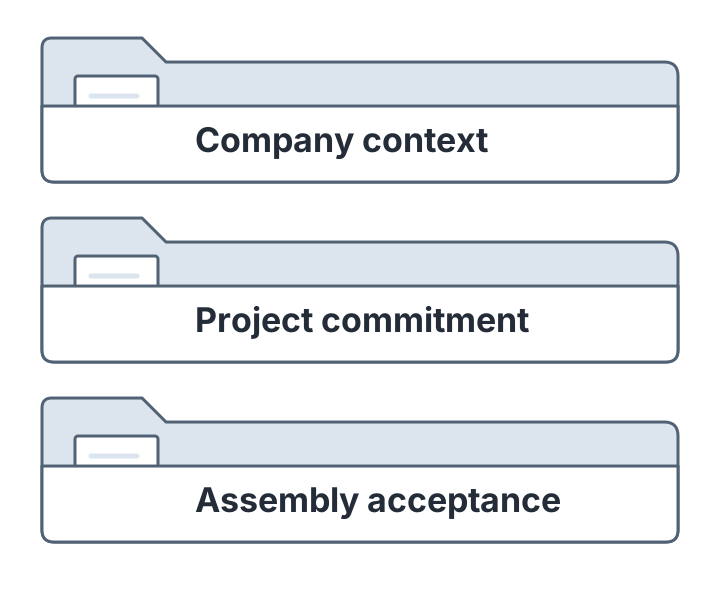
Takeaway: File financial context, project commitments and technical acceptance as distinct evidence.
Method and sources
The EMSNow article is the named case material. The SEC sources support the limited distinctions about statement scope and GAAP versus non-GAAP presentation. This article contributes a new editorial worksheet connecting those labels to supplier questions; it supplies no new financial data or operational findings. Sources were checked on October 8, 2026. No ratios, forecasts or risk scores were calculated.
Further reading
- Sourcing and quality — Organize the evidence required for a component purchase.
- Engineering guides — Record the technical conditions separately from supplier context.
- Frequency-converter specification — Define the assembly’s requirements before discussing its manufacture.
Frequently asked questions
How to read earnings per share?
Read its period, share basis and accounting label in the original document. EPS is a shareholder-oriented financial measure, not a measure of your production allocation or assembly yield. For procurement, retain it as company context and seek separate operational evidence for the order.
How to read an earnings report?
Record the period and reporting status, separate historical results from outlook, and identify the accounting basis. In this case, FY2026 result sections are distinct from FY2027 outlook sections. Verify financial labels in the original company documents, then collect separate evidence for your order.
What is Jabil's expected revenue in 2026?
The case report places FY2026 in its result sections and FY2027 in its outlook sections. It is therefore not the document to treat as an earlier FY2026 forecast. For that historical expectation, locate the original outlook published at the relevant date; this guide does not reproduce financial values.
Sources
- Jabil Posts Fourth Quarter and Fiscal Year 2026 Results — EMSNow Accessed October 8, 2026.
- Beginners' Guide to Financial Statement — U.S. Securities and Exchange Commission Accessed October 8, 2026.
- Non-GAAP Financial Measures, staff interpretations — U.S. Securities and Exchange Commission Accessed October 8, 2026.